Description
At a glance
- Who it’s for
- Kids ages 11 to 14 (works for grades 5 to 9) who love drama club, musicals, rehearsals and being on stage. Made for parents, including ADHD parents, homeschool families and middle school teachers.
- What’s included
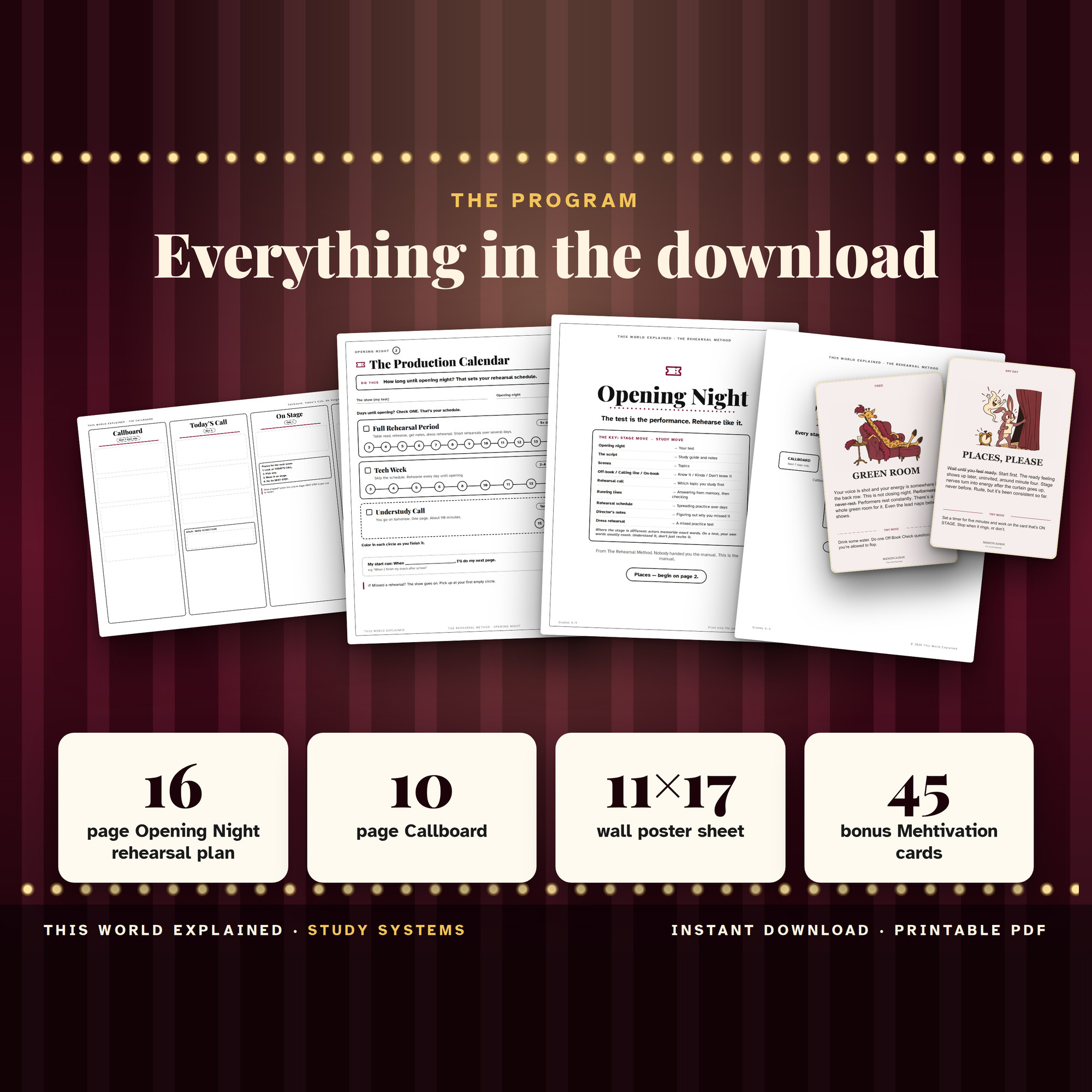
- Opening Night: test prep guide, 16 pages; The Callboard: homework kanban board, 10 pages; The Callboard: single 11×17 poster for a print shop; Bonus: Mehtivation: The Opening Night Deck, 45 illustrated pep-talk cards (12 pages)
- How it works
- Your kid tests themselves first with notes closed, rates each topic (OFF-BOOK / CALLING LINE / ON-BOOK), practices the weak topics from memory on 2 or more days, checks every mistake, then runs a mixed, timed practice test. Three routes: 5+ days, 2 to 4 days, or the test is tomorrow (one 90-minute page).
- Format
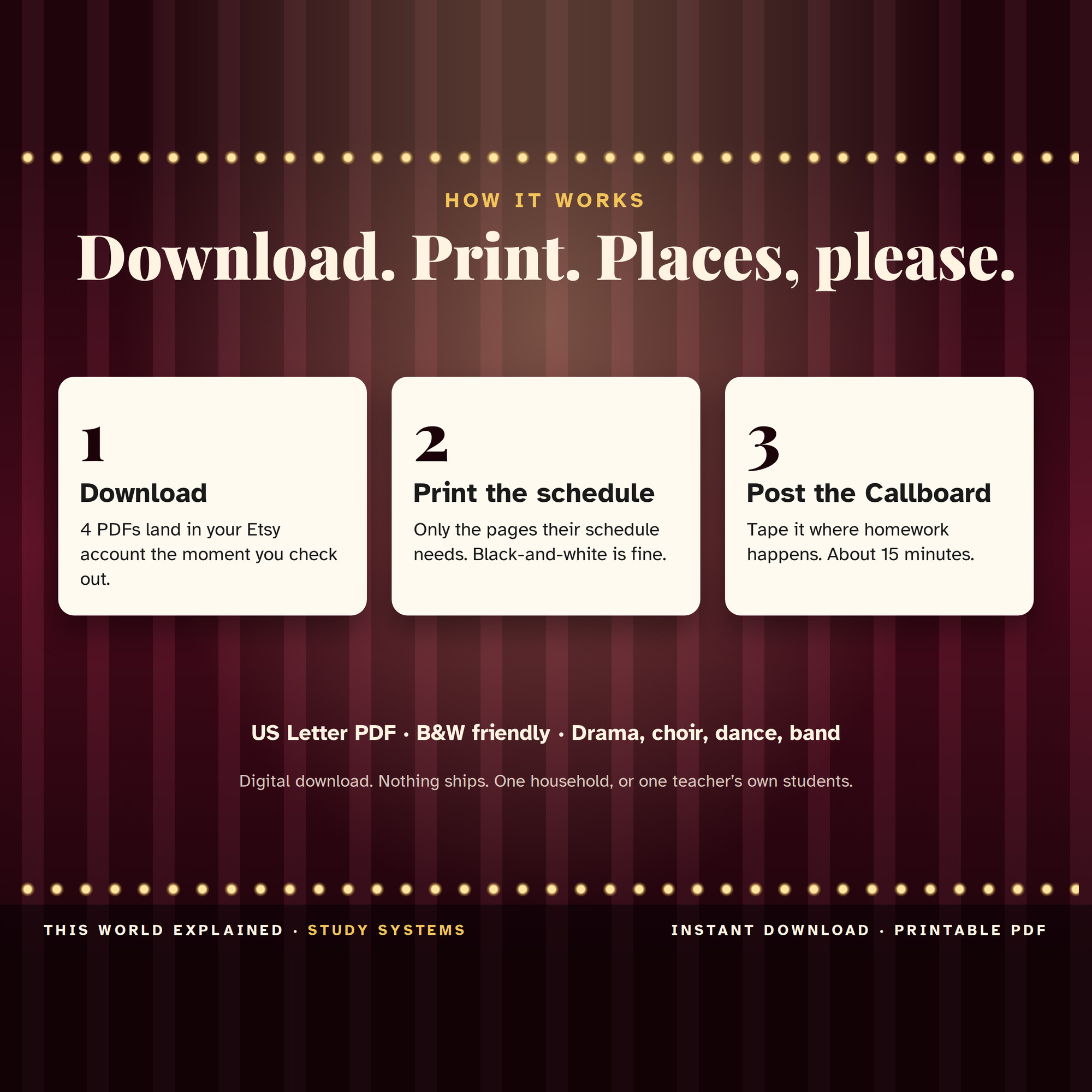
- Instant download, 4 PDFs. US Letter, black-and-white friendly, print at home. Nothing ships.
- Price
- $16.99 (save $1.99 vs. buying both separately)
- License
- One household, or one teacher’s own students. Reprint as often as you need.
Your theater kid learned forty pages of script in three weeks. Every cue, every entrance, the harmony line nobody else could hold. Nobody had to beg.
So why does a twenty-word vocab quiz end in tears at 9 p.m.?
Because rehearsal comes with a method, and studying never got one. Opening Night gives them the method they already trust, with the script down and the lights up.
INSTANT DOWNLOAD · 4 PRINTABLE PDFs · AGES 10–15 (GRADES 5–9) · DRAMA, CHOIR, DANCE, BAND
Places, Please
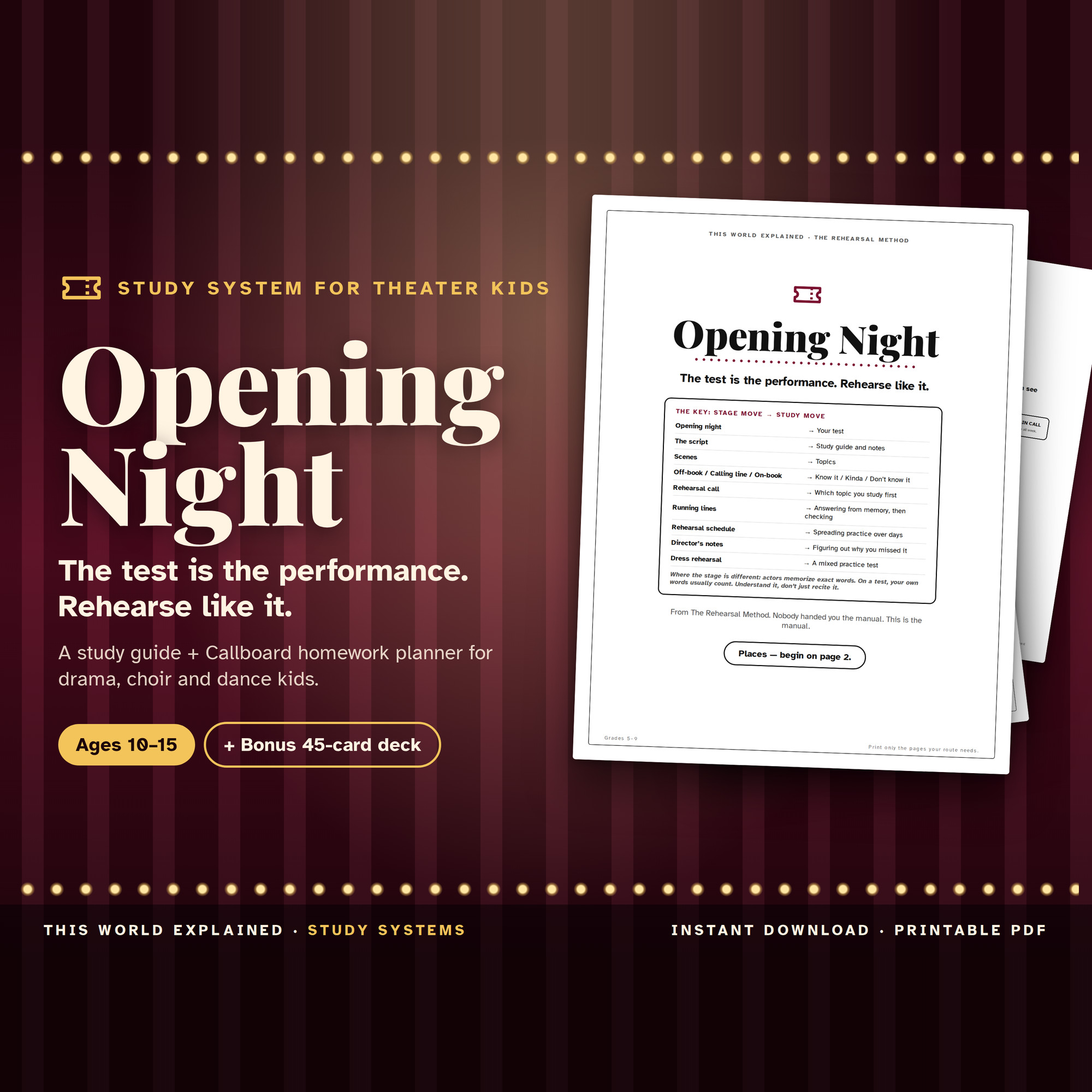
Opening Night is a 16-page rehearsal process for ONE test. The test is the show. Topics are scenes. The study guide is the script. Old quizzes are the director’s past notes. Each page is one rehearsal, written in a stage manager’s voice: calm, precise, a little wry.
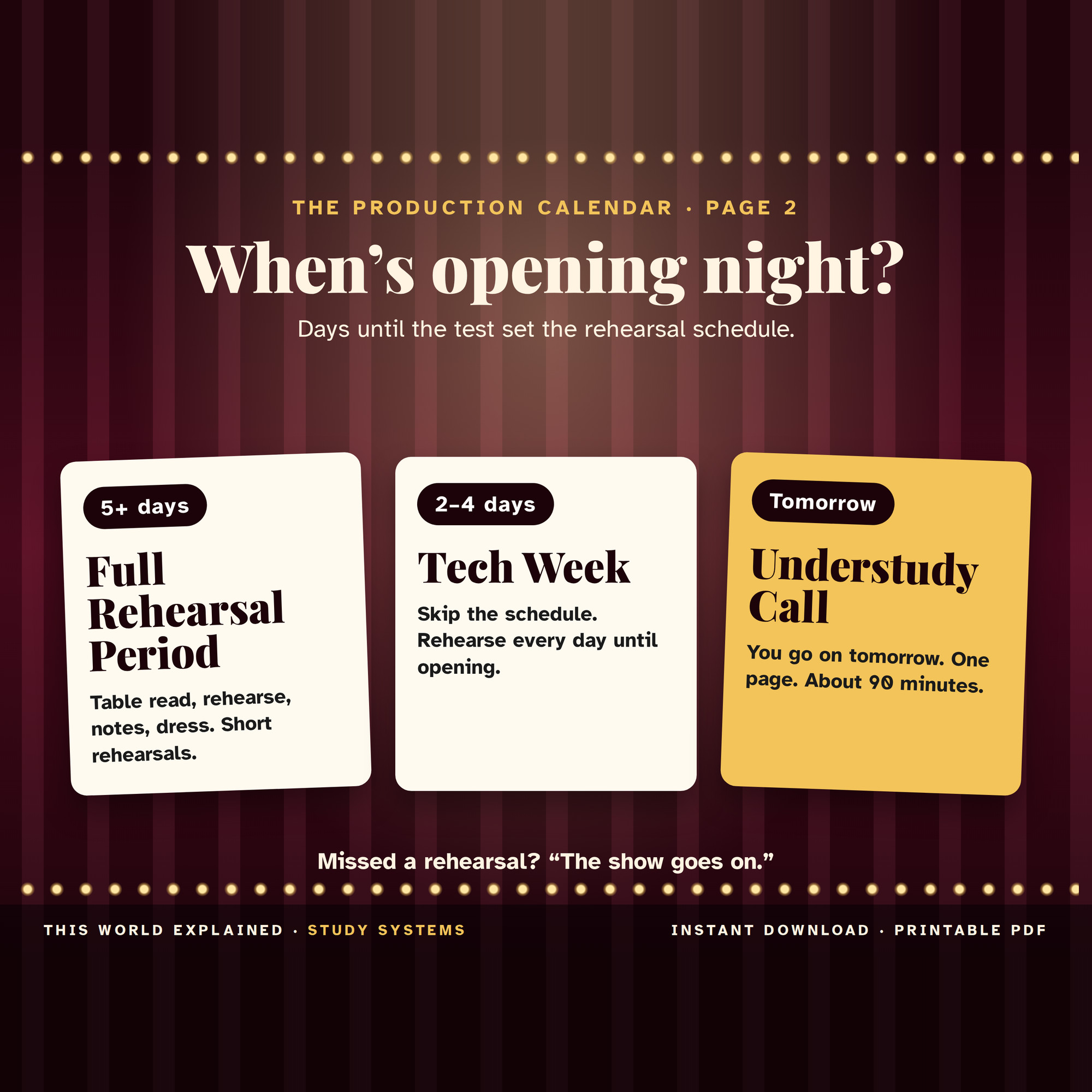
The Production Calendar: How long until opening night? That sets the schedule: a Full Rehearsal Period (5+ days), Tech Week (2–4 days), or the Understudy Call: You Go On Tomorrow (one page, about 90 minutes. “Understudies do this all the time.”)
The Table Read: What kind of show is it? Which scenes are in it?
Off-Book Check: Script down. One line from each scene, from memory. Then mark it OFF-BOOK, CALLING LINE or ON-BOOK. “Reading along feels like knowing your lines. The only test is saying it with the script down.”
The Rehearsal Call: “Directors don’t rehearse the solid scenes.” The shaky ones get called first.
Rehearsal Schedule: “Nobody learns a show the night before.” Every called scene goes on two or more different days.
Rehearsal Techniques: Run Lines for vocab, Blocking Walk-Through for processes, Find the Motivation for the big “why” questions, a Monologue Outline for essays. Rereading notes? “That’s reading the script. Actors get off-book by saying lines without looking.”
Cue Cards: Every question is a cue. Every answer is your line. Fold on the dotted line.
Rehearsal Log + Director’s Notes: Run the scene, call “line!” when stuck, then check. “Notes aren’t criticism. Every good performer gets them.”
Dress Rehearsal: Full run, show conditions, no stopping. Then the Call Sheet for opening night: night before, call time, curtain up.
One honest note, printed right on the cover: actors memorize exact words, but on a test your own words usually count. So the method pushes understanding, not just recitation.
The Callboard: Post The Schedule Where The Cast Can See It
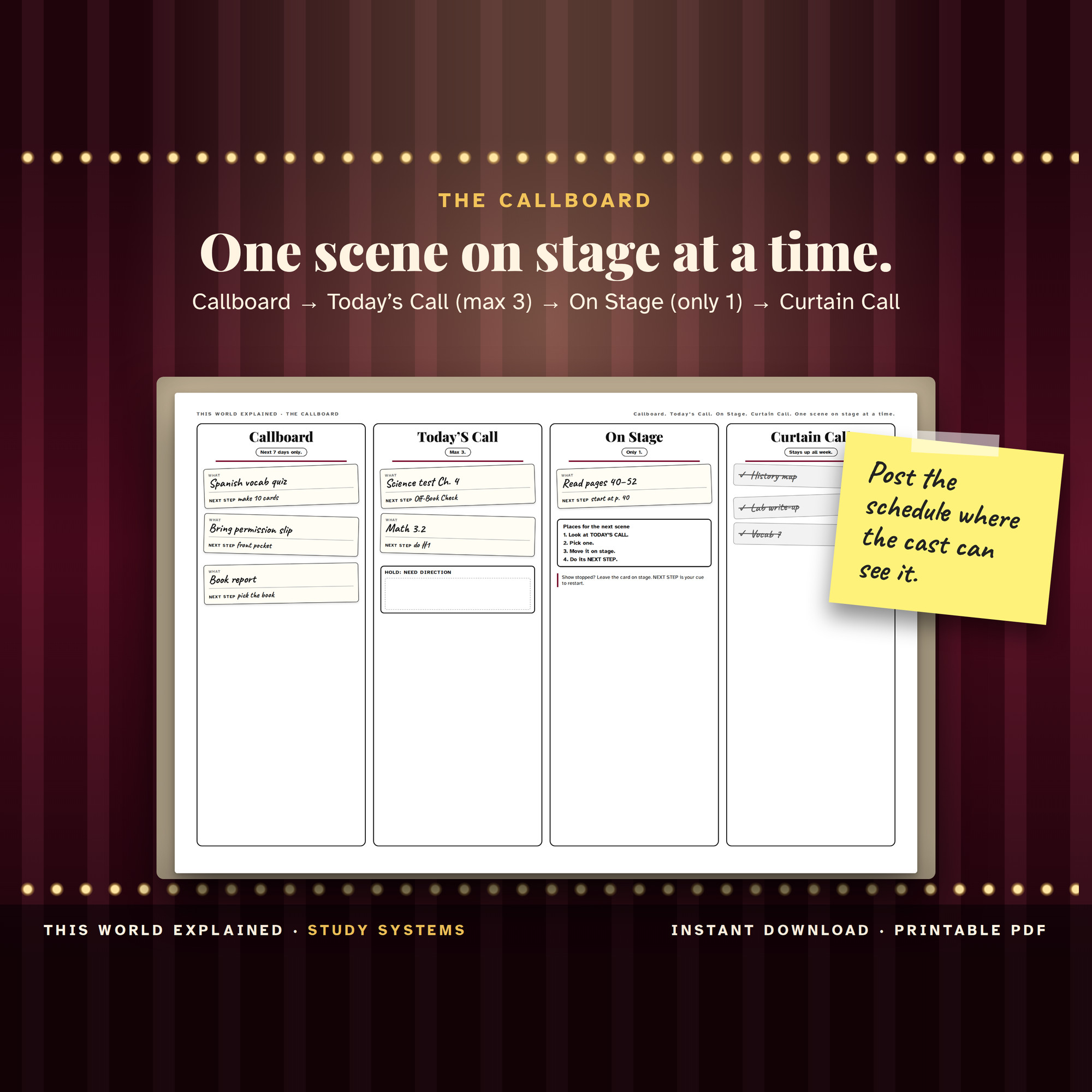
Every stage manager posts the schedule where the cast can see it. Now your kid does too. Four columns go on the wall:
CALLBOARD · everything due in the next 7 days
TODAY’S CALL · max 3. Set today’s call once. Then rehearse.
ON STAGE · only 1. One scene on stage at a time.
CURTAIN CALL · finished work stays up all week. Take a bow.
Stuck? Call a HOLD: NEED DIRECTION and write who can help. A big project becomes a Full Production card, broken into scenes, with only the next one on stage.
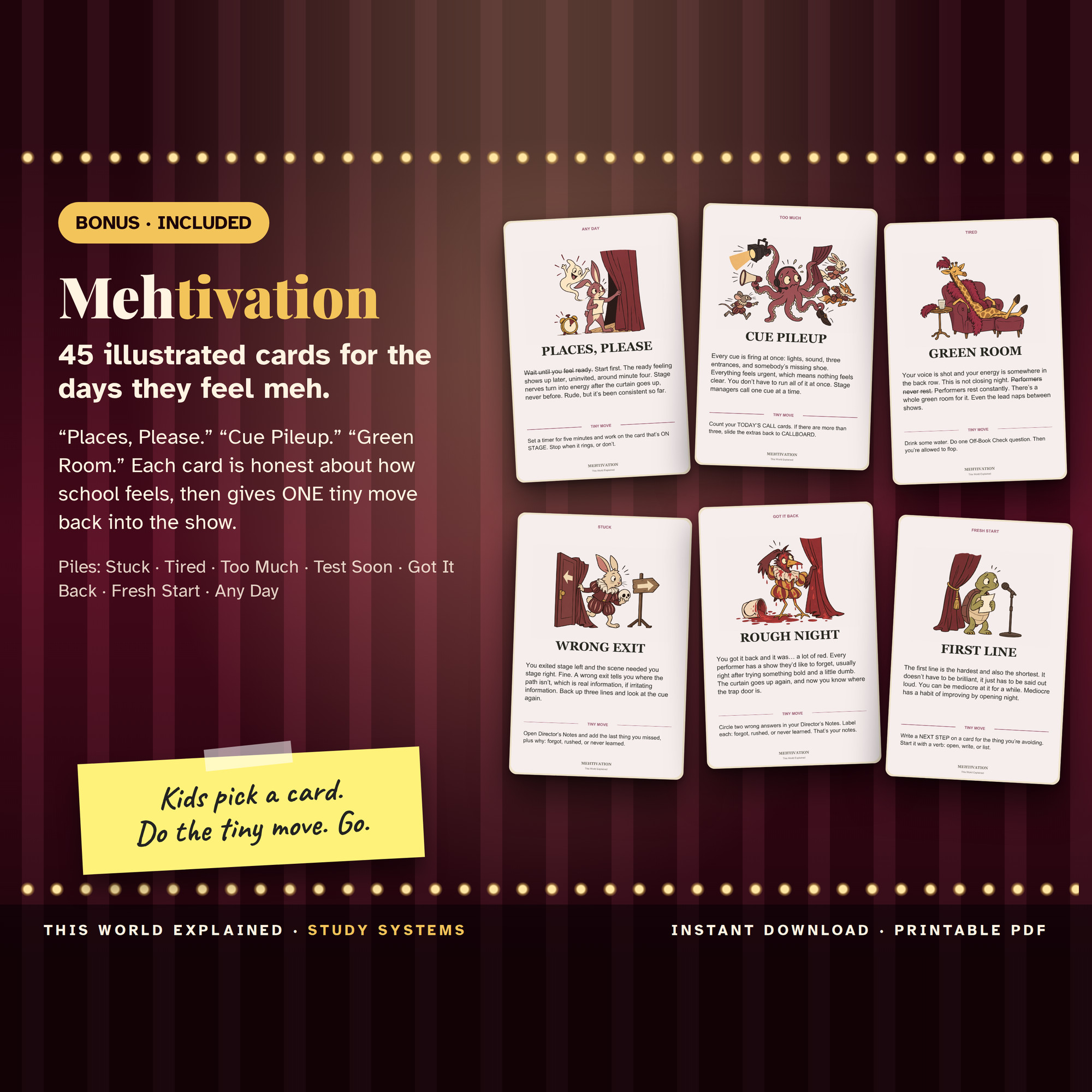
Bonus: Mehtivation, The Opening Night Deck
45 illustrated, printable pep-talk cards for the days your performer opens the page and the spotlight feels very far away. “Places, Please.” “Cue Pileup.” “Green Room.” “Rough Night.” Each card is honest about how school feels, then gives ONE tiny move that points straight back to a page in the system. Sorted into piles: Stuck, Tired, Too Much, Test Soon, Got It Back, Fresh Start, Any Day.
For The Big-Feelings, Big-Energy Performer
Designed with distractible kids and kids with ADHD in mind:
- One scene per page, with a DO THIS line of 20 words or fewer
- Every run counts, even the messy ones
- “The show goes on.” A missed rehearsal never resets anything
- No applause meters, streaks or rankings
- A grown-up, professional tone, not a cutesy one
- Print only the pages on their schedule
It follows research on how memory works (practice from memory, spaced over days, with feedback). It’s a tool, not a treatment.
Your Seat In The House
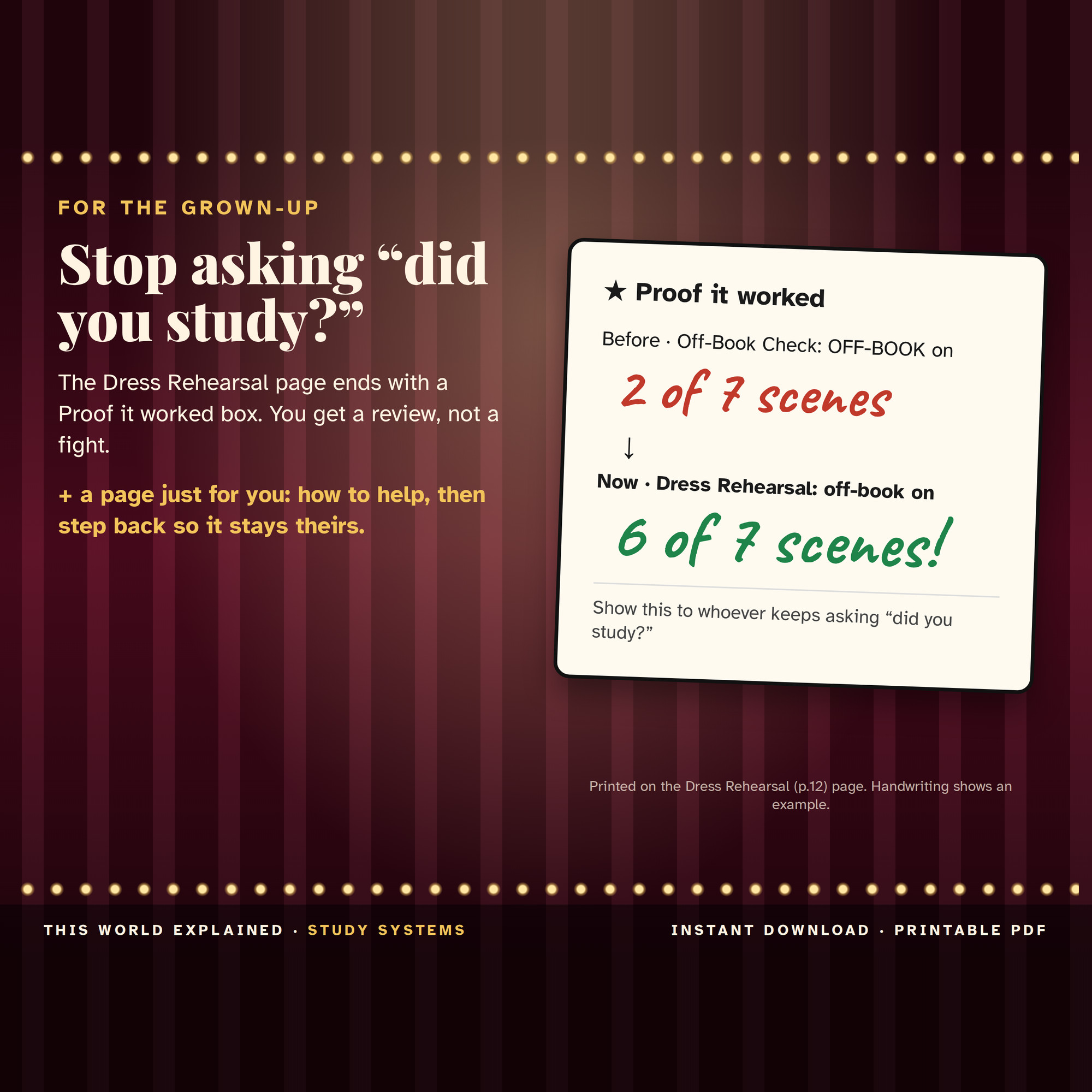
The Dress Rehearsal page ends with a “Proof it worked” box: OFF-BOOK on ___ of ___ scenes at the start, off-book on ___ of ___ now. It says: “Show this to whoever keeps asking ‘did you study?'” A separate page for the adult explains how to help (run lines with them, ask “which page is next?”) and then step back so the production stays theirs.
The Program (What’s In The Download)
- Opening Night: test prep rehearsal process, 16 pages
- The Callboard: 10 pages (4 column pages, setup page, cut-out cards, Full Production card, daily routine poster, adult page)
- The Callboard as a single 11×17 poster for a print shop
- Bonus: Mehtivation, The Opening Night Deck, 45 illustrated cards
US Letter. Black-and-white friendly. Reprint Opening Night for every test this year.
Good To Know
- Digital download. Nothing ships.
- License: one household, or one teacher’s or director’s own students. Please don’t share or resell.
- Not affiliated with any show, theater or awards organization.
- Fits choir, band and dance kids too: anyone who lives by a rehearsal schedule.
- Also comes in Fantasy RPG and Sports editions, with matching page numbers for siblings.
Questions? Contact us anytime.
Questions parents ask
What ages and grades is this for?
Ages 11 to 14 is the sweet spot (grades 5 to 9). The tone is grown-up, with no cartoon mascots, so a 13-year-old won’t feel babied.
What is the bonus card deck?
Mehtivation: The Opening Night Deck is 45 illustrated, printable pep-talk cards for the days your kid feels meh. Each card names the feeling, then gives one tiny move back into their Opening Night and The Callboard pages. It’s included free with this bundle.
The test is tomorrow. Is it too late?
No. There is a one-page plan for the night before, about 90 minutes, in order.
Is it good for kids with ADHD?
It was designed with distractible kids and kids with ADHD in mind: one job per page, a short DO THIS line, short sessions, a clear next step and nothing that resets after a missed day. It is a study tool, not a treatment.
Does my kid have to love theater things?
It helps. The whole system speaks the language of drama club, musicals, rehearsals and being on stage. If that’s not your kid, the same system comes in 10 other worlds with matching page numbers.
Can I use it for homeschool or my classroom?
Yes. The license covers one household, or one teacher’s own students. Reprint it for every test this year.



Reviews
There are no reviews yet.